Maria Jarema
Revolutionary Commissar of Abstraction
–

When:
Mon, October 26, 2026, 7pm–10pm
Free admission
There will be simultaneous translation into German Sign Language.
No registration is required.
When:
Mon, October 26, 2026, 7pm–10pm
Free admission
There will be simultaneous translation into German Sign Language.
No registration is required.
On Monday, October 26 from 7pm, the opening of the exhibition "Maria Jarema: Revolutionary Commissar of Abstraction" will take place. Lenbachhaus Munich cordially invites you and your friends!
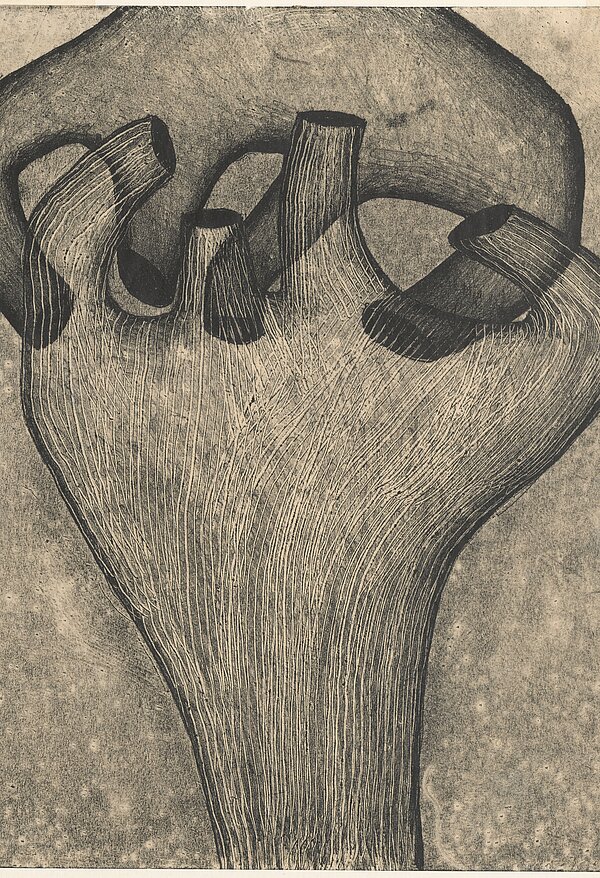
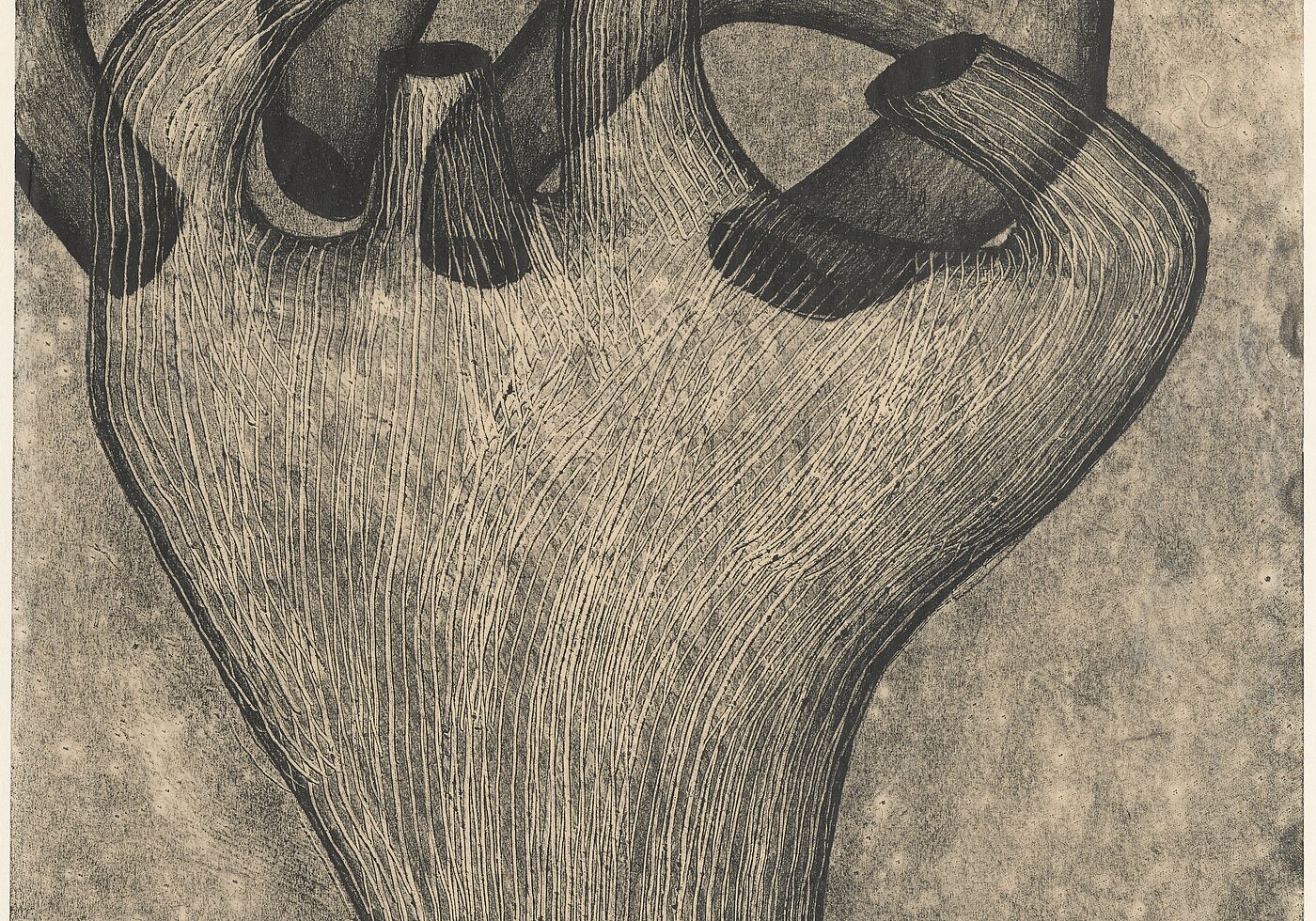
Maria Jarema, the "revolutionary commissar of abstraction", was a woman of many talents: Jarema (1908–1958) is regarded as one of the most significant artists of Polish modernism; she was a sculptor and painter, she experimented with printmaking techniques, designed costumes and stage sets for dance and theater, in some of which she performed as an actress. She wrote theoretical texts on art, spoke out in the Polish Parliament for women’s right to reproductive and general self-determination, and authored manifestos against class society.
Together with her brother, the artist Józef Jarema, she was active in the experimental theater group Cricot from 1934 to 1939 and founded the successor group Cricot 2 with Tadeusz Kantor in the 1950s (the above quote on Jarema’s revolutionary abstraction is his). Jarema’s interest in capturing rhythm and movement, the spoken word, and physical expression in the form of sculpture and image stemmed from this experience in theater. That she was an abstract thinker is apparent in the titles of her works: entire series are titled "Rhythm", "Expression", "Penetration", or "Filter".
Krakow was the center of her life. For Jarema, art was not a political tool, but a revolutionary practice capable of transforming thought and changing society for the better.
The exhibition at the Lenbachhaus is the first monographic presentation of Jarema’s work in Germany. On display are works from all periods of her career, including numerous paintings, monotypes, sculptures, and costumes.
With speeches from
Mona Fuchs, Deputy Mayor of the City of Munich
Matthias Mühling, Director of Lenbachhaus
Stephanie Weber, Curator of the exhibition
