
The Women Artists of the Blue Rider
–
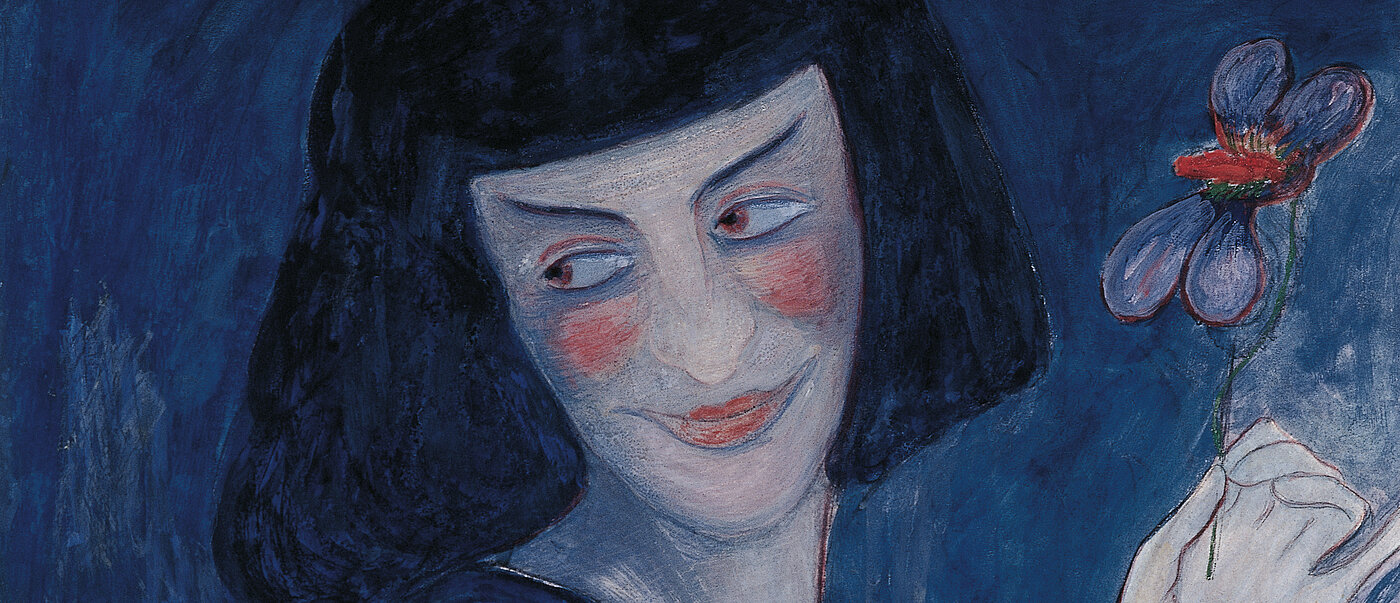
In 1913, Else Lasker-Schüler wrote to her friend Marianne von Werefkin:
"Esteemed princess, much-noble wild boy, sweet painter,
when may I come—I dream of the sweetness of your pictures.
(The Prince of Thebes) Else Lasker-Schüler (friend of the Blue Rider’s Horsewoman)"
Else Lasker-Schüler liked to toy with gender roles and identities, sometimes styling herself Prince of Thebes. The curious moniker "Blaue Reiterreiterin"—literally, the “Blue Rider’s rideress”—she coined for the Blue Rider’s women artists is the leitmotif in this exhibition project.
It is the first time that we dedicate a comprehensive presentation to the women artists in the Blue Rider’s orbit, turning the spotlight on their substantial contributions to the avant-garde of the early twentieth century. They were cosmopolitans, patronesses, and pioneers of a new kind of art. They dared to cross national, social, and creative boundaries. Their lives were defined by their resolve to forge their own path, defy limitations, and explore new creative ideas.
"Off to Munich," Gabriele Münter wrote with palpable enthusiasm when she enrolled in art school. Pursuing a career in the arts was a courageous choice: women were barred from studying at the public academies. Laws codified their unequal status. The self-organized Ladies’ Academy in Munich at least offered some training to aspiring women artists, and various associations fought for universal suffrage. The women artists’ revolutionary attitude is recognizable in their work as well. In their pictures, letters, and writings, they sought to chart a new approach to the world. Their ideas contributed significantly to the genesis of an Expressionist art. Portraits, still lifes, and landscapes reflect a hitherto unseen handling of color and form. Women artists devised innovative ways of rendering nature, spirituality, and human existence. Their perspectives on social realities and anti-bourgeois and nonconforming identities attest to their deliberate rejection of traditional standards in an art world dominated by men.
The artists whose works the exhibition gathers were friends and rivals, cofounders of the New Munich Artists’ Association (NKVM) and active in the Blue Rider circle. In Marianne von Werefkin’s "Pink Salon," they debated questions of art and political issues and sketched the outlines of a new history of art. Gabriele Münter invited the public to see her work in exhibitions at the renowned gallery Der Sturm. Thanks to Elisabeth Epstein’s extensive network and her acquaintance with Robert Delaunay and Sonia Delaunay-Terk, the French avant-garde participated in the Blue Rider project. Carla Pohle’s graphic art sent a social and political message, grappling with poverty, class, and war.
The exhibition spans a period from the years around 1900, when Munich was home to a vital women’s rights movement, to the Blue Rider and on to the women artists’ activities during the Weimar Republic, in exile, and into the 1940s. Putting particular focus on the social construction of role models, questions of identity, and gender roles as well as the international networks connecting Munich to Paris and Moscow, it is the first presentation to honor the manifold aesthetics of the “Women Artists of the Blue Rider.”
With works by: Erma Bossi—Sonia Delaunay-Terk—Emmi Dresler—Elisabeth Epstein—Elisabeth Erdmann-Macke—Natalia Goncharova—Else Lasker-Schüler—Maria Franck-Marc—Olga Meerson—Gabriele Münter—Carla Pohle—Marianne von Werefkin
An exhibition of the Städtische Galerie im Lenbachhaus und Kunstbau, Munich, in cooperation with Museum Wiesbaden and the Paula Modersohn-Becker Museum, Bremen, as well as the Fondazione Marianne Werefkin, Ascona/CH.
The exhibition is held as part of the celebrations on occasion of Gabriele Münter’s 150th birthday. Concurrently, UNESCO has proclaimed a commemorative year in honor of Gabriele Münter’s life and work in 2027.
A collaboration between the Lenbachhaus and the Gabriele Münter and Johannes Eichner Foundation. With generous support from Förderverein Lenbachhaus e.V., the Society of the Friends of the Lenbachhaus.
The exhibition is funded by the Kulturstiftung der Länder.
The accompanying catalogue will be published by Hirmer Verlag in separate German, English, and Italian editions. The catalogue is supported by the Ernst von Siemens Art Foundation.
Exhibition Partners


Media Partnership


Works
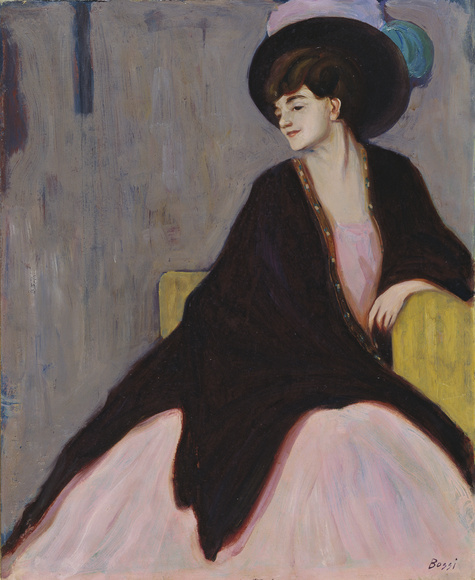
Erma Bossi
Selbstbildnis (als Bildnis von Marianne von Werefkin 1970 erworben), um 1910
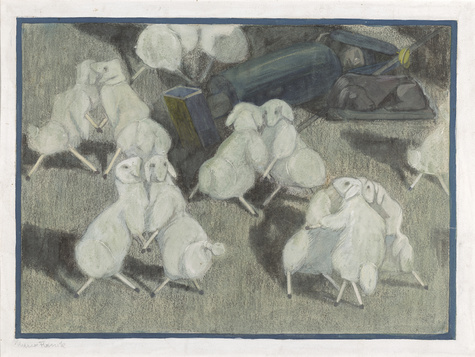
Maria Franck-Marc
Tanzende Schafe, 1908
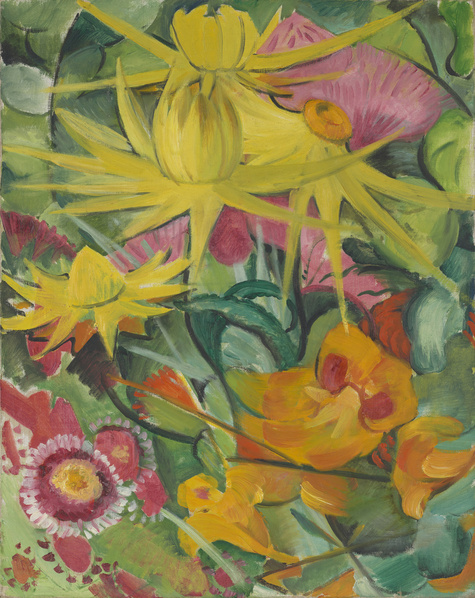
Maria Franck-Marc
Blumen und gelbe Disteln, um 1913
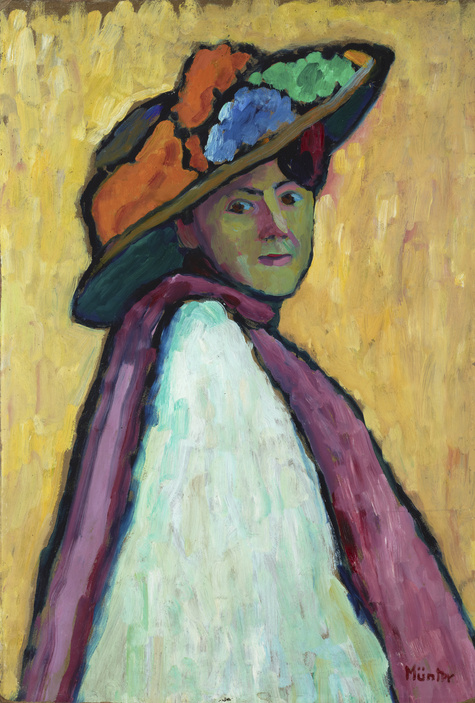
Gabriele Münter
Bildnis Marianne von Werefkin, 1909
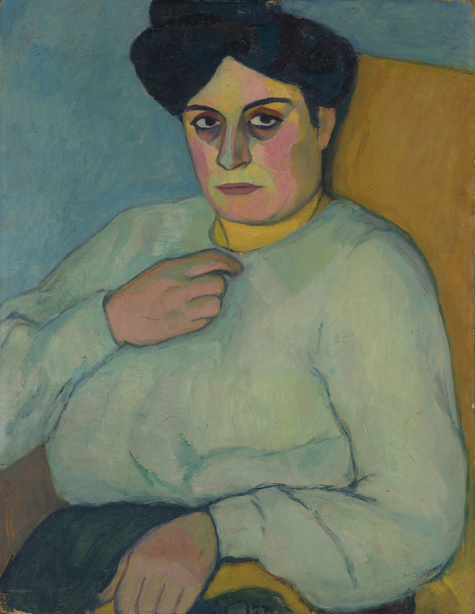
Elisabeth Iwanowna Epstein
Selbstporträt, 1911
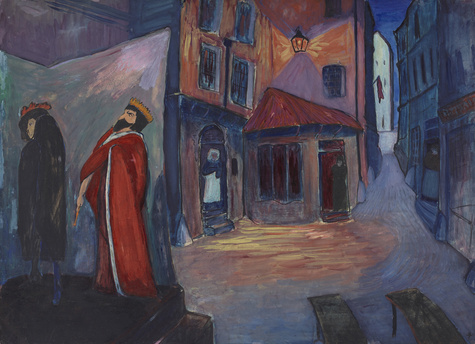
Marianne von Werefkin
In die Nacht hinein, 1910
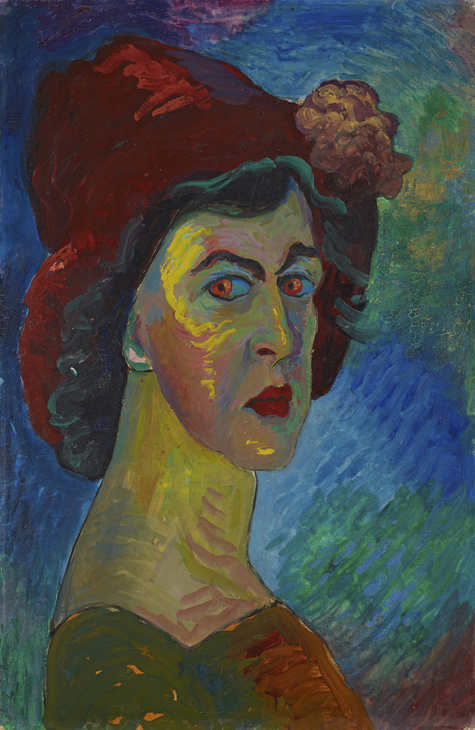
Marianne von Werefkin
Selbstbildnis I, um 1910
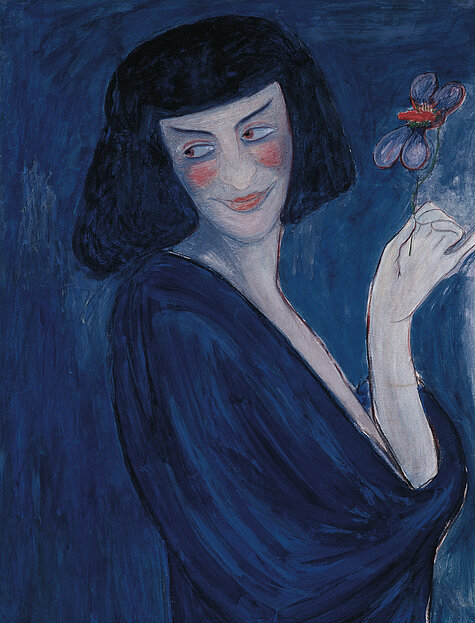 Marianne von Werefkin, The Dancer Sacharoff, 1990, Fondazione Marianne Werefkin, Museo comunale d’arte moderna, Ascona
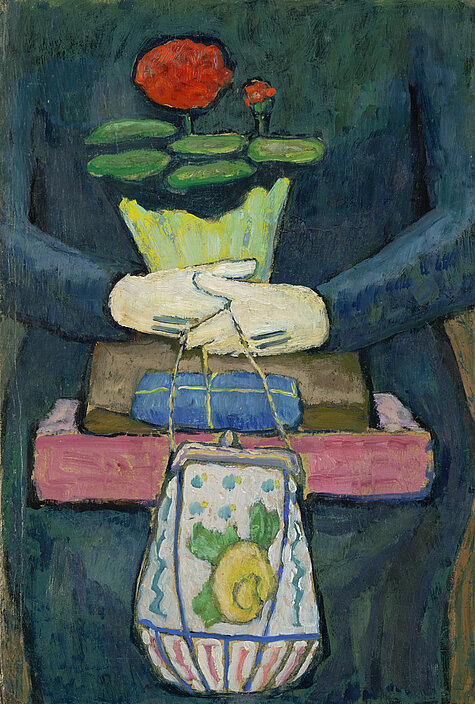 Gabriele Münter, Still Life on the Tram (After Shopping), c. 1912, Gabriele Münter- und Johannes Eichner-Stiftung, München, Photo: Lenbachhaus, © VG Bild-Kunst, Bonn 2026
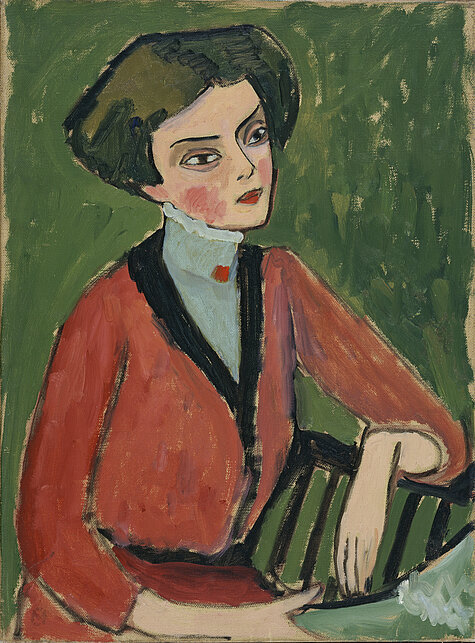 Gabriele Münter, Olga von Hartmann, c. 1910, Gabriele Münter- und Johannes Eichner-Stiftung, München, Photo: Lenbachhaus, © VG Bild-Kunst, Bonn 2026
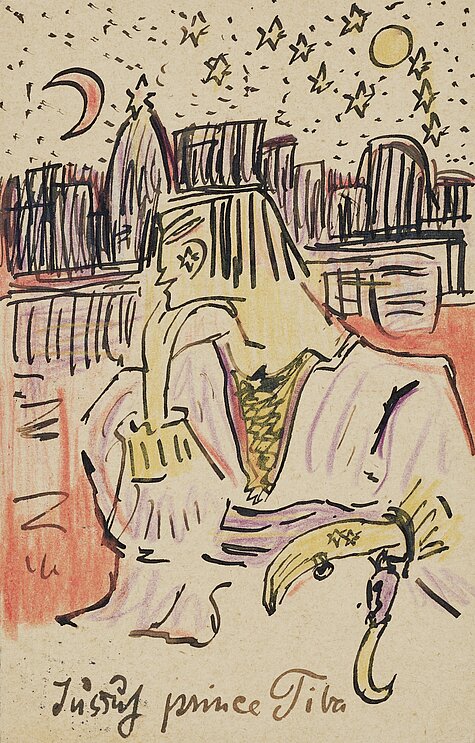 Else Lasker-Schüler, Jussuf Prince Tiba, 1913, Franz Marc Museum, Etta and Otto Stangl Foundation, Photo: collecto.art
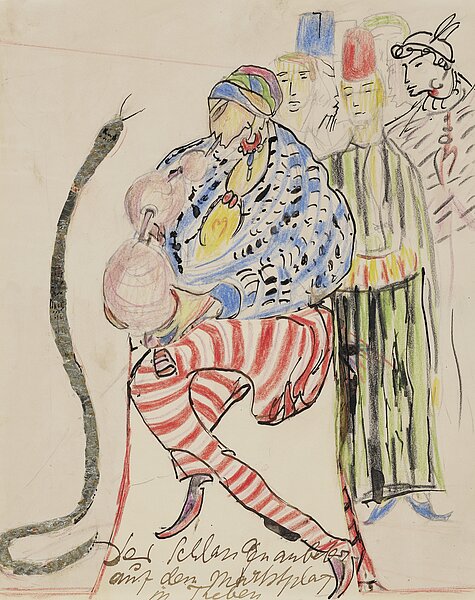 Else Lasker-Schüler, The Snake Worshipper in the Market Square in Thebes, c. 1921/1930s, Franz Marc Foundation, Franz Marc Museum, donation by the community of co-heirs as per Etta Stangl, Photo: collecto.art
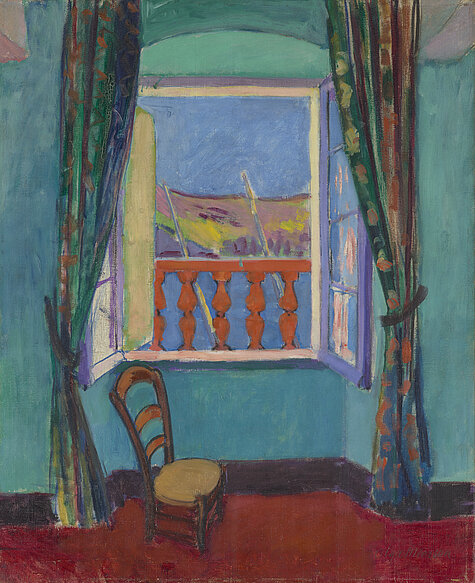 Olga Meerson, View from the Window, 1911, Lenbachhaus Munich, donation of Heinz Pringsheim, Photo: Lenbachhaus
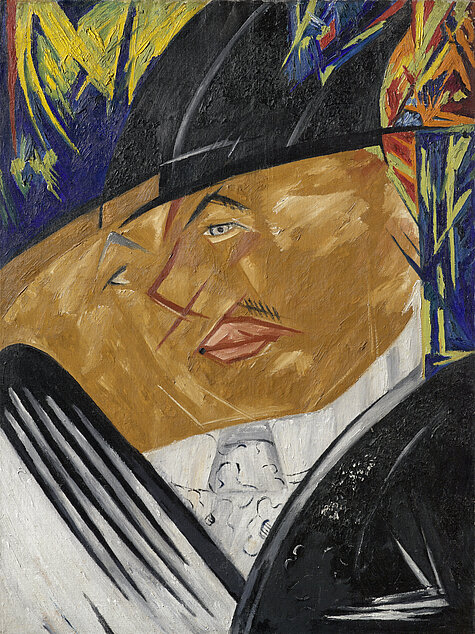 Natalia Goncharova, Portrait of Mikhail Larionov, 1908, Museum Ludwig, Köln / donation of the Ludwig Collection, Photo: Historisches Archiv mit Rheinischem Bildarchiv, RBA 180 541, © VG Bild-Kunst, Bonn 2026
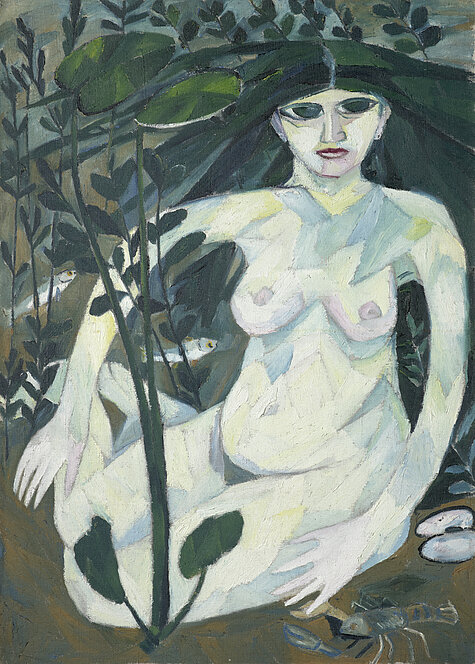 Natalia Goncharova, Rusalka (Water Nymph), 1908, Museum Ludwig, Köln / donation of the Ludwig Collection, Photo: Historisches Archiv mit Rheinischem Bildarchiv, RBA 172 293, © VG Bild-Kunst, Bonn 2026
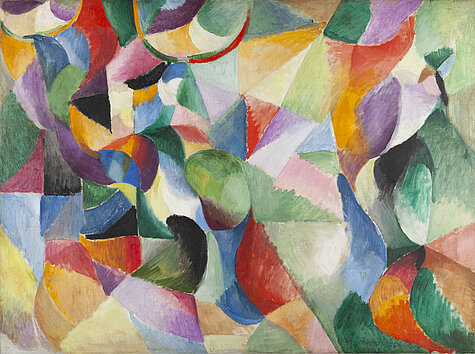 Sonia Delaunay, Bal Bullier, 1913, Kunsthalle Bielefeld, @ Pracusa 20260805
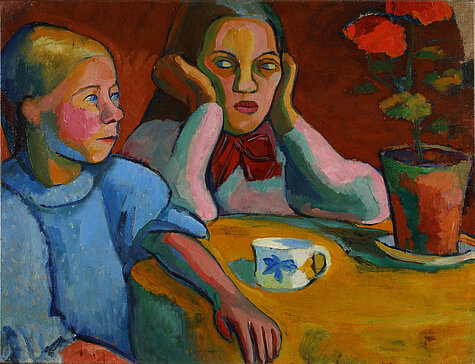 Sonia Delaunay-Terk, Deux Fillettes Finlandaises, 1907, Kunsthalle Emden, © Pracusa 20260805
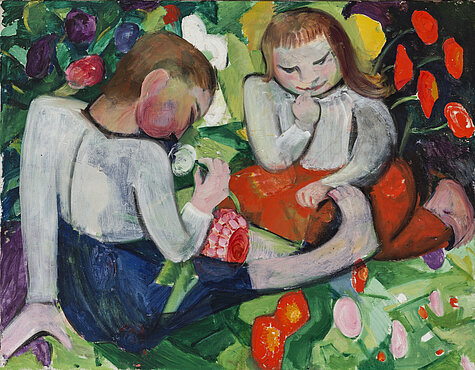 Maria Franck-Marc, Two Children Among Flowers, c. 1912, Private collection. Photo: Walter Bayer

