
After Expressionism
–

"Neue Sachlichkeit" or "New Objectivity" has become generally accepted as an umbrella term for the art of the Weimar Republic. It was coined by Gustav F. Hartlaub, the director of the art museum in Mannheim, to describe diverse positions in realism including verism and classicism. In 1925, he organized an exhibition titled "New Objectivity. German Painting after Expressionism".
That same year, the Munich-based art historian and artist Franz Roh proposed an alternative in a book on "Post-Expressionism—Magic Realism: Problems in Recent European Painting", which surveyed the developments since the end of World War I. Roh was less confident that a single overarching name could be found for the various new tendencies: he rejected "ideal realism," "verism," and "neoclassicism" and eventually settled on "post-Expressionism" to capture the historical dependency. Another phrase he chose, "magic realism," is hard to define but seeks to encompass the wide spectrum of phenomena in contemporary figurative painting. However, this focus on representational positions, be they realistic or magical, led Hartlaub and Roh to disregard major parts of the art of the period.
In Germany, the outbreak of the Great War had put an abrupt end to the rising artistic avant-garde, including the Blue Rider. The group's Russian members, Wassily Kandinsky, Alexej Jawlensky, and Marianne von Werefkin, were declared enemy aliens and compelled to leave the country at short notice; others including August Macke and Franz Marc were killed in battle. Scarred by the horrors of the war, the survivors reconsidered their creative approaches. Many artists who were profoundly distressed by what they had experienced disavowed the formal innovations of the avant-garde such as Cubism, Expressionism, and abstraction and focused their energies on soberly realist depictions of the world around them. Others built on the achievements of the prewar period to break new ground: the Bauhaus fused abstract tendencies with new principles of design, Expressionism blended with realism, Dadaism and Surrealism devised distinctive variants of figuration, and the cosmopolitan artists’ initiative "Abstraction-Création," which counted Kandinsky and Jean Hélion among its members, promoted abstract and concrete art.
Our selection includes major works from the Lenbachhaus's collections. Created by German and international artists between 1918 and the 1940s, these treasures are rarely on public display, and some have not been seen in many years. They exemplify the period's extraordinarily rich range of visual idioms and thematic concerns.
Works
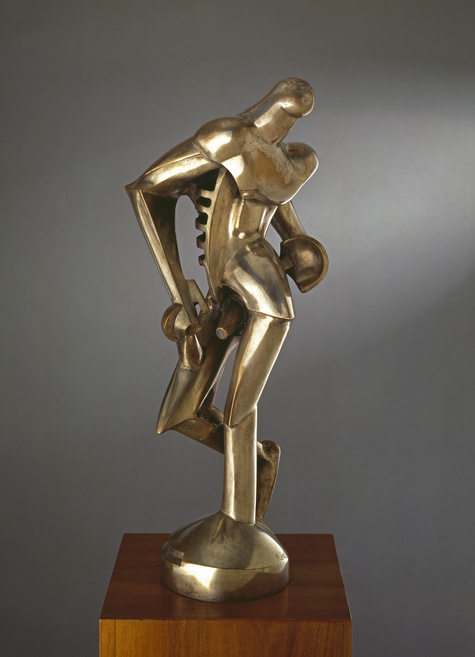
Rudolf Belling
Organische Formen (Schreitender), 1921
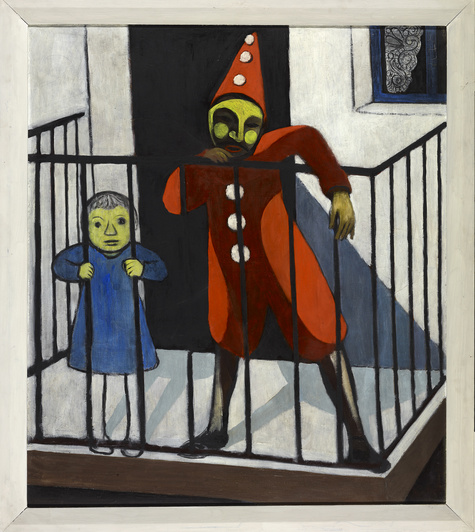
Albert Burkart
Kinder auf dem Balkon, 1929
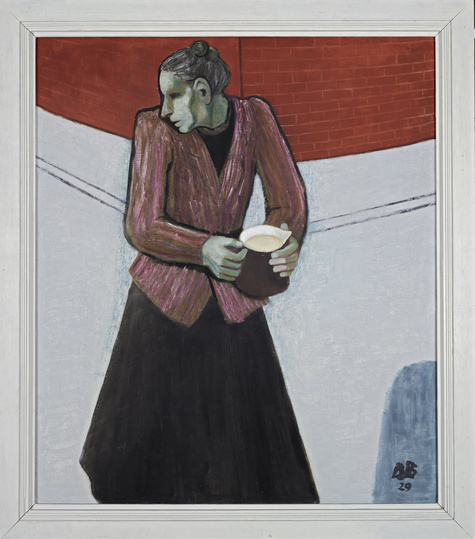
Albert Burkart
Frau mit Milchtopf, 1929

Karl Caspar
Ostern / Auferstehung, 1926
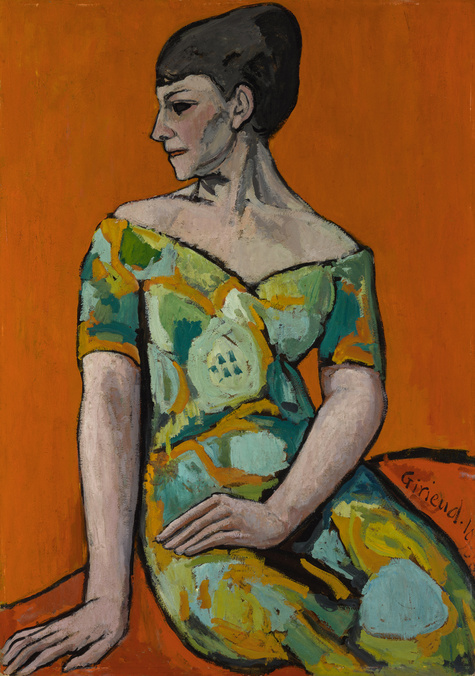
Pierre Girieud
Bildnis der Malerin Emilie Charmy, 1908
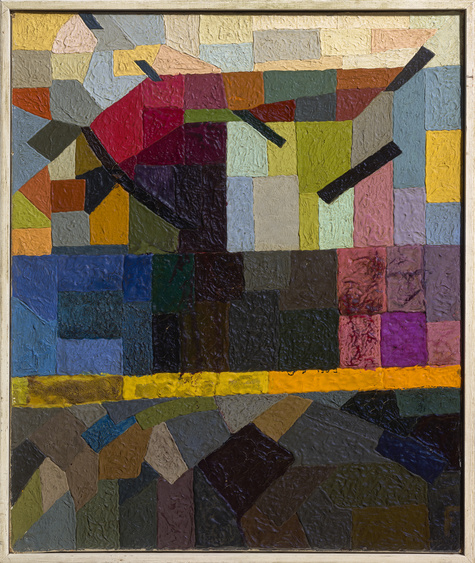
Otto Freundlich
Ein Baum, 1927
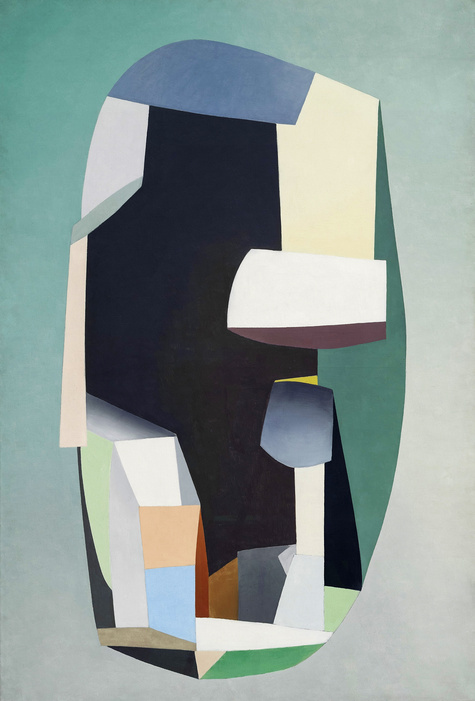
Jean Hélion
Figure creuse, 1936/37
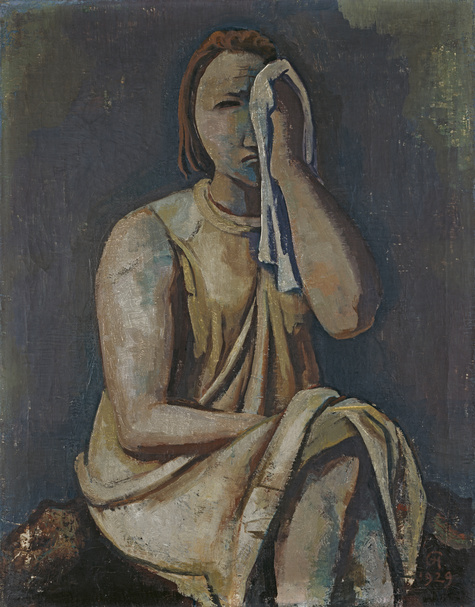
Karl Hofer
Weinende, 1929
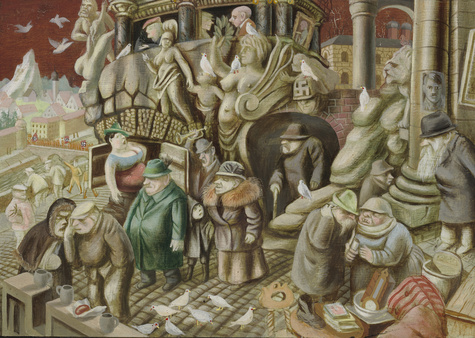
Karl Hubbuch
München, um 1933/1935
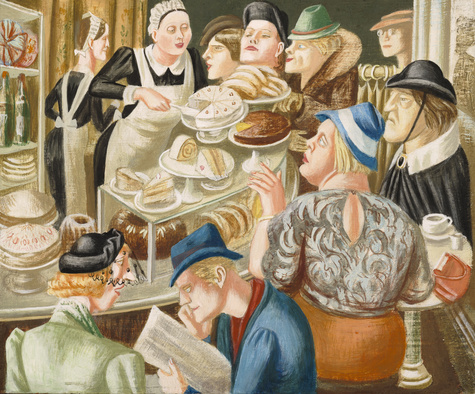
Karl Hubbuch
Die Schleckmäuler, um 1933/35
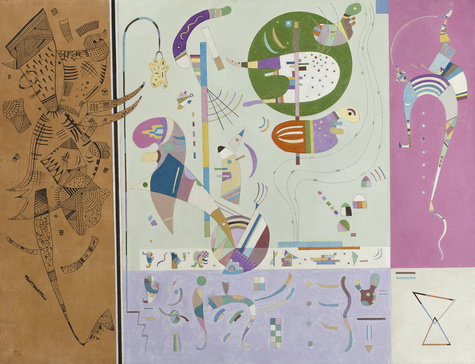
Wassily Kandinsky
Parties diverses, 1940
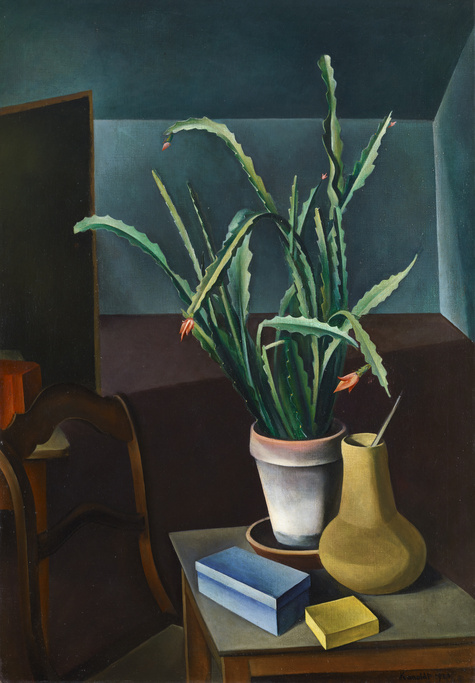
Alexander Kanoldt
Kaktus-Stillleben, 1923
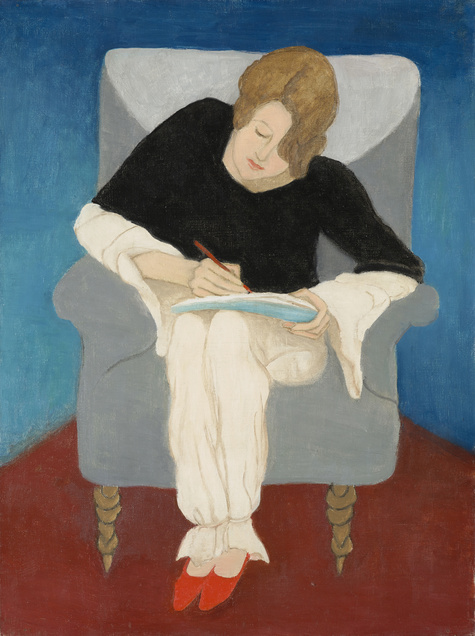
Gabriele Münter
Dame im Sessel, schreibend (Stenographie. Schweizerin in Pyjama), 1929
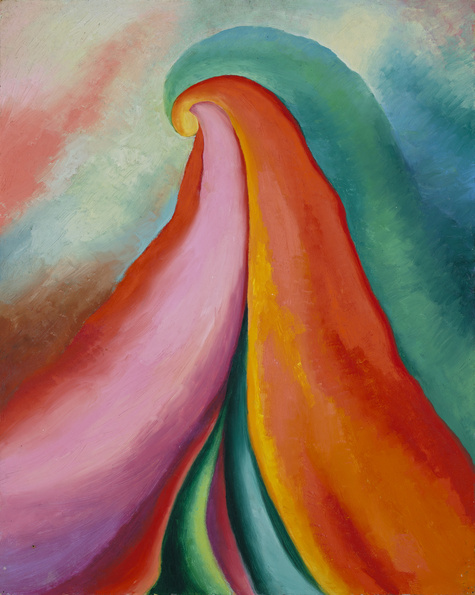
Georgia O'Keeffe
Series I, No. 4, 1918
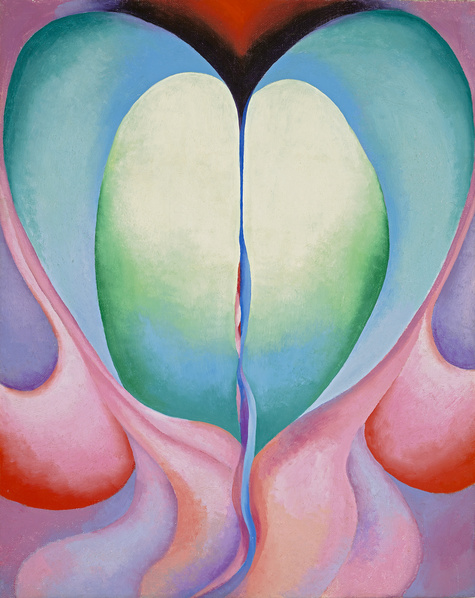
Georgia O'Keeffe
Series I, No. 8, 1919
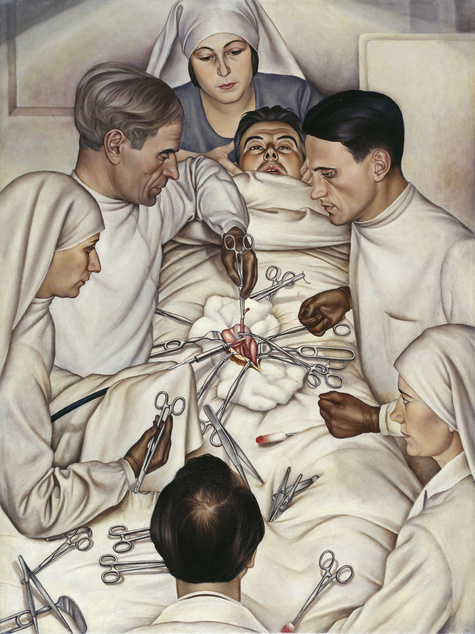
Christian Schad
Operation, 1929
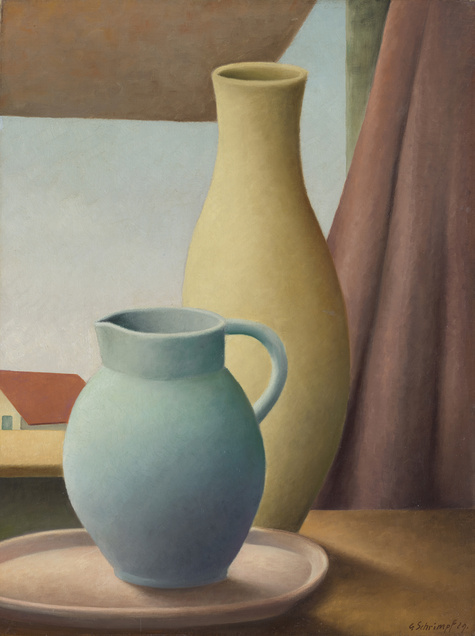
Georg Schrimpf
Stillleben, 1929
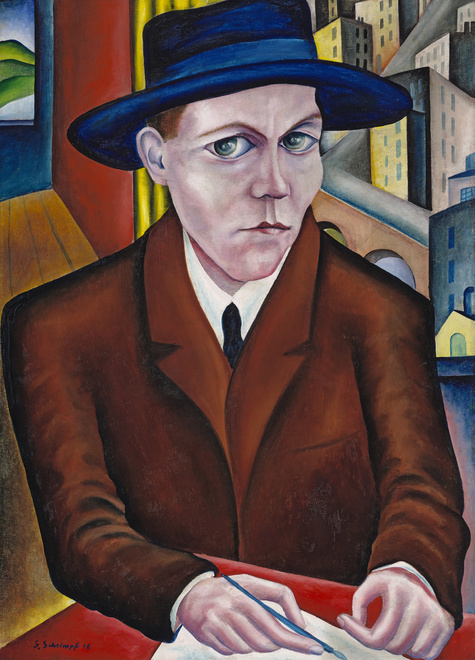
Georg Schrimpf
Oskar Maria Graf, 1918
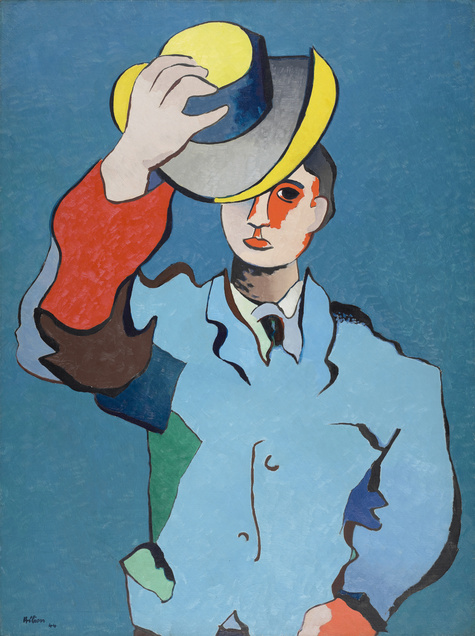
Jean Hélion
Le coup de chapeau, 1944

